
Contents8
At a glance
In thirty seconds- StakeBefore opening code to AI assistants, an IT services firm must know where they run, which repositories they reach and what trace they leave.
- MechanismCoder templates build on reusable Terraform modules, and written design rules set how to add new ones.
- ProofThe registry and its documentation, which I wrote alone in one week in early April 2026.
- ImpactA new workstation or project starts from a shared, versioned base, and the question "where may the assistant work?" gets a technical answer.
- LimitsTeam adoption of the registry is not measured, and no AI-related gain is claimed.
- Client
 Silico
- My role
- Registry designer, contributor to the AI usage framework
- Setting
- Direct
- Team
- Solo · 1 person


The starting point
In a team that moves from one client project to the next, every developer ends up with their own environment, slightly different from their colleagues’. The gaps stay invisible until the day they cost half a day of troubleshooting.
When AI assistants enter daily work, the question gets more serious: which machine does the assistant run on, which repositories can it reach, and what trace is left? A written rule is not enough if the environment does not carry it.
What I built
I designed a private registry of templates for Coder, the tool that creates developers’ workspaces. Each template, devcontainer or envbuilder, builds on reusable Terraform modules: the project database, the application environment, Git submodule handling. Written design rules explain how to add a template without duplicating what exists.
The structuring choice was to describe environments as code. An environment becomes a versioned, reviewed and reproducible artefact; fixing it once fixes it for everyone.
A framework for coding with AI
On top of that foundation, I contributed to defining practices for a controlled use of AI in development1: which tools are allowed, which repositories need an extra approval before merge, how to evaluate an assistant on real tasks, a feature, a fix, a refactor, before adopting it.
Within Silico’s governance effort, aligned with…
Within Silico’s governance effort, aligned with ISO/IEC 27001. The registry itself contains nothing specific to the standard.
What the evidence shows
The registry and its design rules are the direct evidence of this work2. For the AI usage framework, the evidence is of another kind: indicators defined with their method, ready to be collected3.
Sole author of the registry: 18…
Sole author of the registry: 18 commits, from 1 to 8 April 2026.
Baselines are collected during a discovery…
Baselines are collected during a discovery phase, and targets are set with the engineering and security leads.
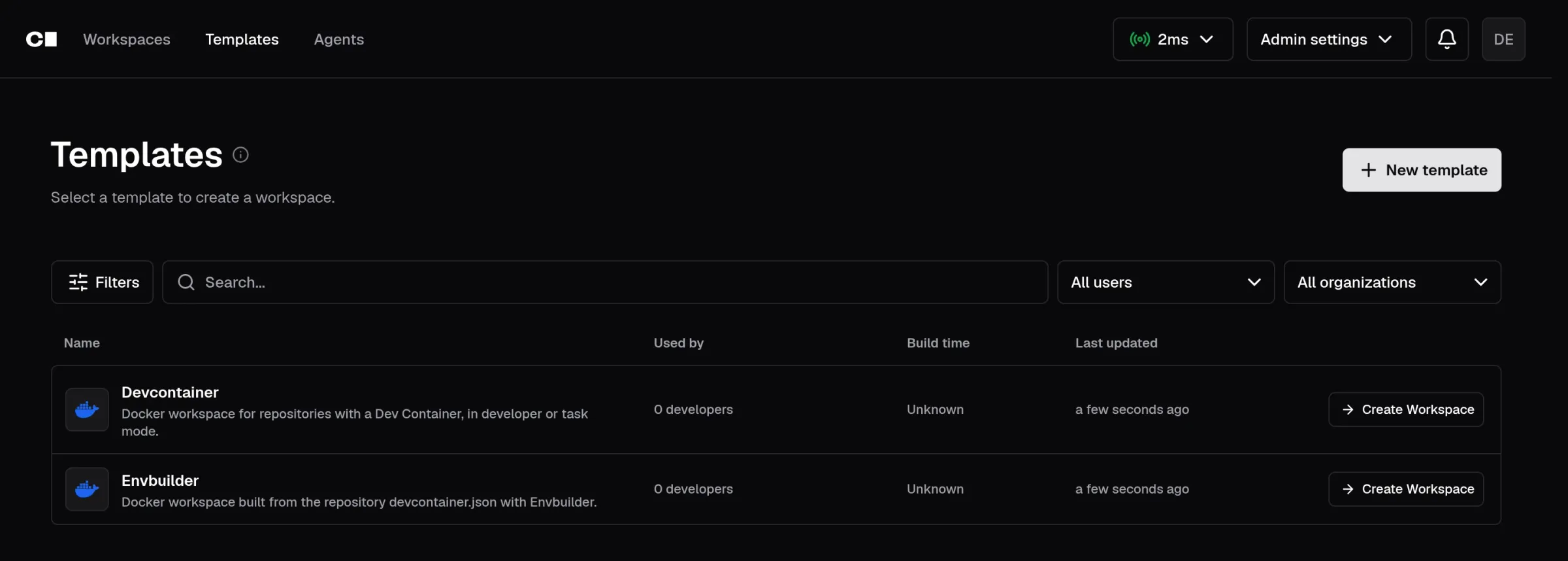
What it changes
A new workstation or project starts from a shared, versioned base; gaps between environments shrink by construction. For AI adoption, the environment the assistant works in becomes something you can review and control.
My takeaway: the safety of AI use in code is decided upstream, in that environment. It is a short piece of work, but it conditions what follows: developers’ trust, management’s trust, and the ability to measure.
Limits
- The number of developers and projects using the registry is not measured to date.
- The framework’s indicators are defined but not yet measured: no before-and-after gain is claimed.
- The framework is part of an alignment effort with ISO/IEC 27001; it is not a certification.
Share and reuse
The link, the plain text and visuals ready for LinkedIn.